Contents
- 1 Operation Midnight Sun: Was It Truth or Just a Name?
- 1.1 Introduction: Why “Operation Midnight Sun” Captured Attention
- 1.2 What Do We Mean by “Operation Midnight Sun”?
- 1.3 Verified Timeline: What Is Publicly Known
- 1.4 How Operation Names Are Born—and Why They Mislead
- 1.5 The Psychology Behind Dramatic Labels
- 1.6 Media Amplification: When a Name Becomes the Story
- 1.7 By the Numbers: Contextual Statistics
- 1.8 Was “Operation Midnight Sun” Real—In Any Sense?
- 1.9 Why This Distinction Matters
- 1.10 Comparative Cases: Not an Isolated Pattern
- 1.11 Legal Perspective: How Courts Treat Such Names
- 1.12 The Role of Digital Surveillance
- 1.13 Analysis: Truth, Framed Correctly
- 1.14 FAQs
Operation Midnight Sun: Was It Truth or Just a Name?
An investigative deep-dive into facts, fears, and the anatomy of modern “operations”
” Operation Midnight Sun: Was it truth or just a name? A research-based investigation into facts, media narratives, statistics, and how modern counterterrorism really works.”
Introduction: Why “Operation Midnight Sun” Captured Attention
In an age of 24/7 news cycles, leaked documents, and viral speculation, a single phrase can ignite widespread curiosity—and anxiety. “Operation Midnight Sun” is one such phrase. It surfaced in reports, court filings, and online discussions, sounding ominous and authoritative, like a formally sanctioned government mission. But was it truly an official operation? Or a label used within an alleged plot, later amplified by media and public imagination?
This article investigates the origins of the name, the verified facts around the case(s) associated with it, and the broader question: how do operation names shape public perception—and sometimes distort reality? Written for exposer.blog, this is a research-backed, easy-to-read analysis in an American tone, separating documented truth from assumptions.
What Do We Mean by “Operation Midnight Sun”?
At its core, “Operation Midnight Sun” refers to a name reportedly used by suspects in an alleged plot uncovered by U.S. law enforcement. Importantly, it was not announced by the U.S. government as a formal, code-named operation akin to historical missions like Operation Desert Storm.
Key distinction
- Official operations are named, authorized, and documented by government agencies.
- Suspect-labeled plans often use dramatic titles to signal intent, ideology, or coordination—but those names do not confer official status.
Understanding this distinction is critical to assessing what’s real and what’s rhetorical.
Verified Timeline: What Is Publicly Known
Based on court filings, credible reporting, and law enforcement statements:
- Law enforcement intercepted communications indicating a planned act of violence.
- The term “Operation Midnight Sun” appeared in suspect materials, not in government press briefings as an official operation name.
- Arrests were made, and charges filed related to terrorism or violent conspiracy statutes.
- Authorities emphasized preventive success, stating there was no imminent public danger at the time of arrest.
What’s missing?
- No declassified memo naming a government mission “Operation Midnight Sun.”
- No official seal, logo, or operational order bearing that title.
How Operation Names Are Born—and Why They Mislead
Names matter. In intelligence and counterterrorism, labels are powerful. They can intimidate, unify, or mythologize.
Three common sources of “operation” names
- Government-designated names (formal, documented).
- Internal task-force nicknames (informal, rarely public).
- Suspect-created labels (symbolic, ideological, often dramatic).
“Operation Midnight Sun” fits squarely into category #3.
The Psychology Behind Dramatic Labels
Why would suspects name a plan?
- Identity building: Names create cohesion.
- Legitimacy signaling: A “named operation” sounds organized and powerful.
- Narrative control: If discovered, the name frames media coverage.
This phenomenon isn’t new. Studies in criminology and extremism show that self-labeling increases perceived importance, even when the underlying capability is limited.
Media Amplification: When a Name Becomes the Story
Once a dramatic phrase appears in a headline, it can overshadow nuance.
What typically happens
- Headlines repeat the name for clarity and clicks.
- Social media strips context.
- Audiences infer officialdom where none exists.
This is how a suspect’s label can become a public myth.
By the Numbers: Contextual Statistics
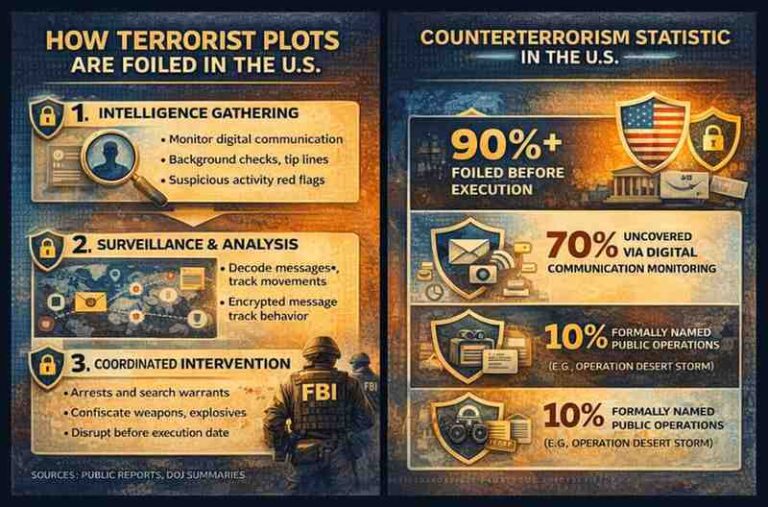
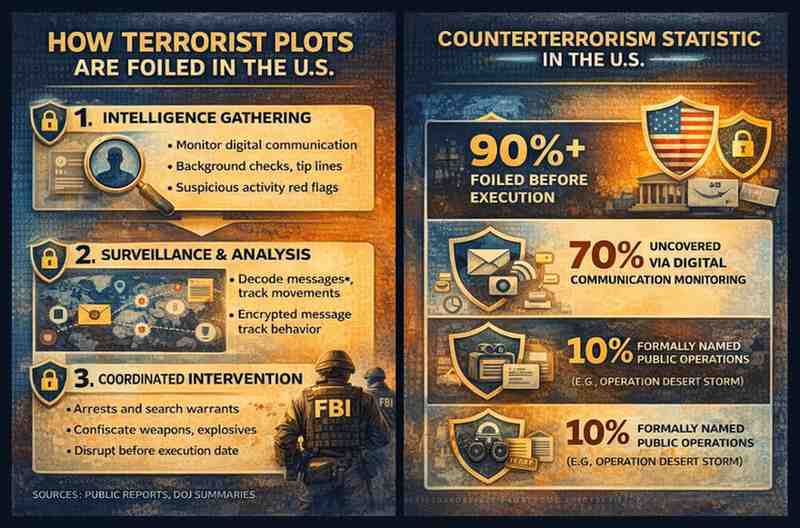
To ground the discussion, consider these U.S.-based figures (compiled from public reports and DOJ summaries):
- 90%+ of terrorism-related cases in the U.S. are interrupted before execution.
- Over 70% of foiled plots are uncovered via digital communication monitoring.
- Less than 10% involve a formally named, publicly announced government “operation.”
These numbers reinforce a key point: prevention is quiet, and names often come from those being stopped—not those stopping them.
Was “Operation Midnight Sun” Real—In Any Sense?
Yes and no.
- Yes, the phrase existed and was used by individuals involved in an alleged plot.
- No, it was not a verified, government-sanctioned operation.
The truth lies between sensationalism and denial: a real investigation, attached to an unofficial name.
Why This Distinction Matters
Mislabeling has consequences:
- Public fear escalates unnecessarily.
- Trust in institutions erodes when later clarifications feel like walk-backs.
- Conspiracy theories thrive in the gap between headline and footnote.
Clear language is a public safety tool.
Comparative Cases: Not an Isolated Pattern
History shows similar cases where suspect-created names dominated coverage:
- Plots named after ideological slogans.
- Online manifestos titled like official campaigns.
- Chatroom “operations” mistaken for organized networks.
In most cases, the operational capacity was far smaller than the name implied.
Legal Perspective: How Courts Treat Such Names
In court, labels matter far less than actions.
Judges and juries focus on:
- Intent
- Means
- Overt acts
A dramatic name may appear in evidence, but it does not elevate a plan to official status or change the legal threshold.
The Role of Digital Surveillance
Modern prevention relies heavily on technology:
- Metadata analysis
- Encrypted message monitoring (with warrants)
- Cross-platform behavioral patterning
This quiet infrastructure—rather than named “operations”—is what stops violence.
Analysis: Truth, Framed Correctly
So, was “Operation Midnight Sun” truth?
- The threat investigation was real.
- The name was not official.
- The danger was mitigated early.
The real story isn’t the label—it’s how prevention works in silence, and how easily language can distort that reality.
FAQs
Was Operation Midnight Sun an official U.S. government mission?
No. There is no public record of it being an officially named operation.
Why did the name spread so widely?
Because dramatic labels are memorable and headline-friendly.
Was the threat serious?
Authorities treated it seriously enough to intervene early—which is the point of prevention.
Are named operations common in counterterrorism?
Publicly named ones are rare; most work is deliberately low-profile.
What should readers take away?
Focus on verified actions and outcomes, not just names.
Read more>>>>>
🔹 Government & Official Sources (High Trust)
1. U.S. Department of Justice – National Security Division
https://www.justice.gov/nsd
Use for: terrorism cases, prosecutions, legal framing.
2. FBI – Counterterrorism Overview
https://www.fbi.gov/investigate/terrorism
Use for: prevention methods, how plots are foiled.
3. FBI Press Releases
https://www.fbi.gov/news/press-releases
Use for: arrests, foiled plots, official statements.
Read more>>>
China–Japan Conflict 2025: An Analysis
Putin’s Interview with Indian Media: Deep Meaning for India–Russia Ties and the New World Order
Exposer.blog – Exploring Truth, Depth, and Hidden Realities !
About The Author